Fish
477 included
 Dave the DiverChinese
Start with the structured game database: fish, recipes, staff, weapons, bosses, DLC, locations, and more.
477 included
741 included

155 included

104 included

58 included
58 included

43 included

36 included
31 included

18 included

16 included

16 included

10 included

2 included

1 included

Pending ingestion
Open released PC and console storefronts directly, or check the correct mobile download and pre-registration page for your region.
 App Store
 Google PlayView pre-registration →
 AvailableSteamPC · macOSOpen official store ↗
 AvailableEpic Games StorePCOpen official store ↗AvailablePlayStationPS4 · PS5Open official store ↗
 AvailableNintendo SwitchSwitch · Switch 2Open official store ↗
 AvailableXboxXbox One · Series X|S · PCOpen official store ↗
MINTROCKET confirmed the iOS and Android date, official store listings, touch controls, and included DREDGE and In the Jungle content.
Mobile launch hub →The first paid story content pack adds the Freshwater Lake, Bancho Grill, Utara Village, and over 10 hours of new story.
DLC overview →Acquire the time-limited Godzilla crossover free before the window closes; content stays available after purchase.
Godzilla pack details →Hand-picked pages across missions, DLC, bosses, and more.
 dlc
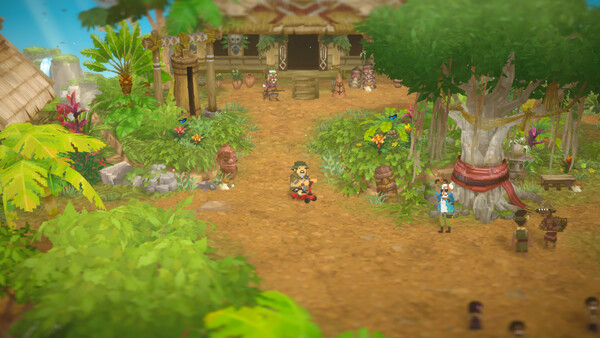
dlcA paid story content pack where Dave leaves the Blue Hole and travels to the jungle to investigate a phenomenon reported in Utara.
 mission
Going deeper is the first mission of Chapter 2: Into the Deep in Dave the Diver.
 mission
Whale Cry is a sub mission in Dave the Diver.
 mission
Request Board is a mission platform in Dave the Diver.
 boss
bossGiant Squid is a medium depths fish and a boss in Dave the Diver.
 location
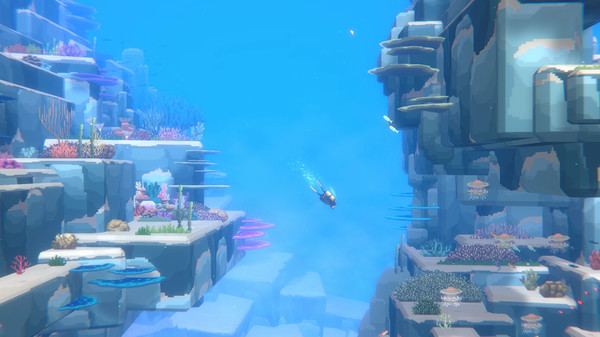
The mysterious ocean area that anchors DAVE THE DIVER's daytime exploration loop.
 recipe
 character
Dave is the titular protagonist and the player character of Dave the Diver.
Read curated routes, profit planning, restaurant operations, collection cleanup, boss prep, and DLC notes after the Wiki index.
A complete visual route from your first dive to a stable daily loop: time, live capture, weapons, oxygen, resources, sushi service, upgrades, and safe boss responses.
A condensed first-week route: follow the story to unlock systems, upgrade carrying capacity and oxygen early, and use each dive to bring back either money or unlock progress.
The strongest money route is not to chase every recipe at once, but to select farmable dishes, raise them steadily, and align party nights with the ingredients you can reliably supply.
Staff are both restaurant throughput and recipe unlocks. Treat hiring, training, dispatch, and branch assignment as one economy system instead of separate menus.
Completion players should separate money fishing from card cleanup. Use non-lethal captures for quality, then rely on farms for repeat supply and recipe coverage.
Players who want SEO-style lookup pages still need a progression layer: chapters, achievements, bosses, fish cards, weapons, and DLC should be grouped into checklists.
DLC content should be kept separate from the base-game route so players can see what applies to their version and what is limited-time, paid, or collaboration content.
Party nights are where restaurant revenue spikes, but only when the menu is prepared before the event. Build the menu around ingredients that can be farmed, dispatched, or repeatedly caught instead of chasing one-off luxury dishes.
Jump straight into profit planning, weapon upgrades, collection tracking, DLC ordering, oxygen management, and more — all curated routes, no fluff.
Interactive calculator: compare every dish by estimated profit and taste.
Interactive tool: compare every weapon by damage, range, and magazine.
Interactive tracker: check off every fish and save your progress.
Which DLC to play first, what's free, what's paid, version notes.
Manage oxygen, plan depth upgrades, avoid drownings.
All seahorse spawn locations, including rare Tiger-tail and Upright.
Restaurant and staff achievement cleanup checklist.
Where to find every material and item, by zone and rarity.
A low-maintenance source map for future content growth: official updates first, community routes second, competitor databases as coverage references.
Steam and MINTROCKET are the authority layer for releases, DLC packs, store media, system requirements, and patch notes.
Community sources are useful for route ideas, staff planning, recipe economics, and late-game cleanup. They stay marked as references until checked against in-game data.
External guide hubs help map search intent: beginner walkthroughs, achievement cleanup, chapter routes, boss prep, and DLC questions.
Competitor databases reveal useful coverage patterns: compact cards, icon-first browsing, recipe and fish databases, and quick lookup pages.